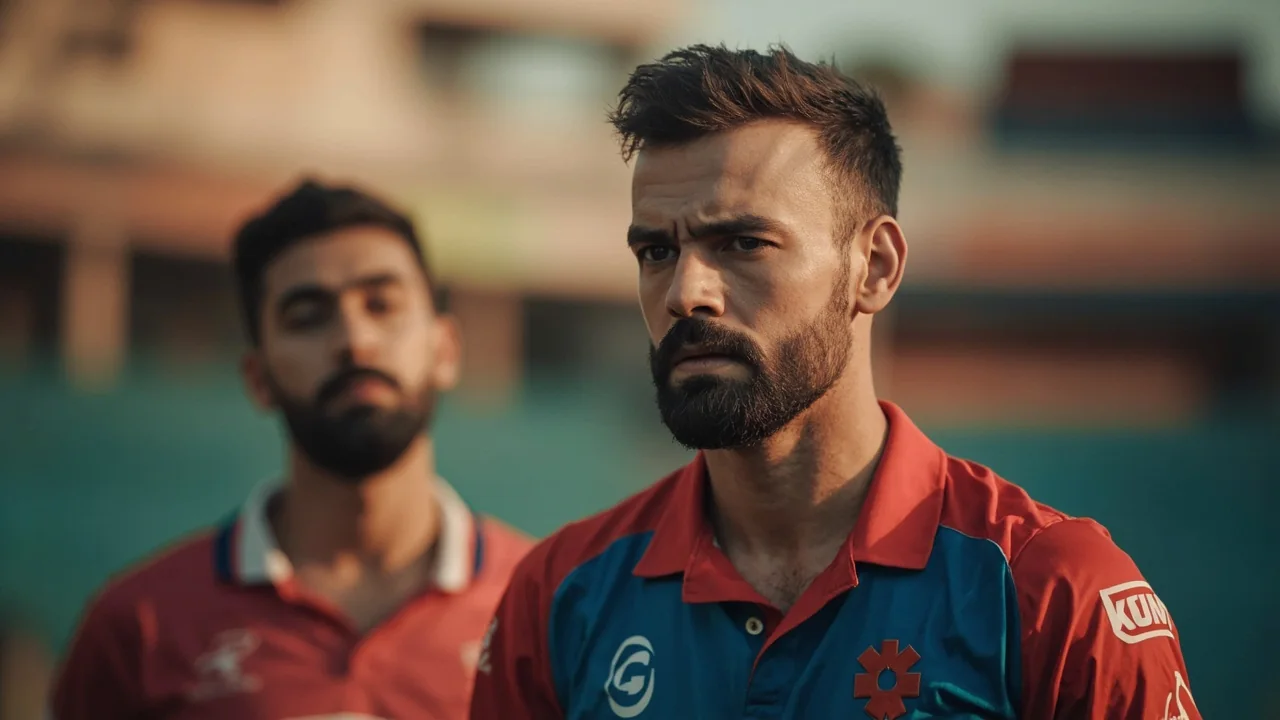
Trent Rockets and Manchester Super Giants met at Lord's on Sunday, 16 August 2026, in the Hundred Men's Final. The Hundred ran 33 group-stage matches and an Eliminator before the two qualifiers arrived. Trent Rockets went in as the second-season winners who lost the previous year's title match. Manchester Super Giants arrived on the back of two consecutive wins over Sunrisers Leeds, looking for their maiden title.
For fantasy players building a team that night, the most useful document was not the match preview in the back pages. It was the captain-math note that Karan Rawat filed for Khel Now on the morning of the final at 10:55 AM IST. That preview named the probable XIs, set out the suggested Dream11 combination, and ranked two captain and two vice-captain options. Reading it back now shows how much of that advice was carried by the toss, and how much was carried by the pitch itself.
Why the toss decides the contest
Lord's on a cloudy mid-August evening is a specific kind of cricket surface. The Khel Now report flagged three structural features worth carrying into captaincy decisions. Early movement for the fast bowlers, a slope on one side that adds to that bowler-friendly phase, and a limited role for spinners. The report also noted that batting second was the favoured option, which makes the toss a multiplier on the captain pick itself, not just a coin flip.
The London forecast for the final evening was cloudy, around 26 degrees Celsius with about 50 percent humidity. Cloud cover in English evening cricket tends to preserve seam movement deeper into the innings than clear skies do. Batting second becomes the favoured option because the ball softens and the chase picks up runs that were not available in the first half of the innings. A captain pick that depends on the chasing script therefore depends on a coin toss that nobody controls.
That is the first lesson the retrospective hands back. The strongest fantasy captaincy logic for this match was split across two scripts: a Trent Rockets top-order script where the new ball matters, and a Manchester Super Giants chasing script where the softened ball matters. The published preview attached a captain and vice-captain to each script, which is the cleanest way to handle a fixture that is genuinely coin-flip dependent at the toss stage.

The 2x on Allen, the 1.5x on Duckett, and what those multipliers buy
Finn Allen was the source-backed first-choice captain. He opens the Trent Rockets innings and gets the largest delivery window of any batter in the probable XI. A top-order role at Lord's against a Manchester Super Giants attack that includes Gus Atkinson and Josh Tongue is the textbook batter-versus-pace setup, and the 2x multiplier turns any above-average Allen score into the team's highest fantasy return.
Ben Duckett was the first-choice vice-captain and carried the 1.5x multiplier. He sits in the Trent Rockets top three, faces the new ball alongside Allen, and offers the largest delivery window of any non-opening batter in the published XI. The 1.5x rewards sustained run-scoring rather than a single boundary-heavy over, and Duckett's role in the batting order gives him a realistic delivery count even on a bowler-friendly night.
Reading that back now, with the verified XI confirmation, the Allen and Duckett multipliers were tied together by the same match script. Allen and Duckett reward a top-order Trent Rockets performance against the new ball. The alternative pair, Mitchell Santner as second-choice captain and Jos Buttler as second-choice vice-captain, were attached to a different script, where Trent Rockets bowl first and Manchester Super Giants bat second on a softened surface. Two multiplier pairs, two match scripts, one published XI.
A 1-3-5-2 build that survives one omission
The published Dream11 XI listed Jos Buttler as wicketkeeper, Finn Allen, Aneurin Donald and Ben Duckett as batters, Craig Overton, Mitchell Santner, Lewis Gregory, Michael Bracewell and Paul Walter as all-rounders, and Gus Atkinson and Calvin Harrison as bowlers. Counting the all-rounders as a single discipline block, that produces a 1-3-5-2 build: one keeper, three specialist batters, five all-rounders, two bowlers.
Five all-rounders gives the team five players who can both bat and bowl. That structure survives a top-order collapse without losing bowling points, because the same players can still contribute with the ball. The trade-off sits in the bowling group: only two specialist bowlers means the team carries a concentration risk if either Gus Atkinson or Calvin Harrison is omitted from the official XI.
Suggested fantasy combination (1-3-5-2)
Wicketkeeper: Jos Buttler.
Batters: Finn Allen, A Donald, Ben Duckett.
All-rounders: Craig Overton, Mitchell Santner, Lewis Gregory, Michael Bracewell, Paul Walter.
Bowlers: Gus Atkinson, Calvin Harrison.
Captain first choice: Finn Allen. Captain second choice: Mitchell Santner.
Vice-captain first choice: Ben Duckett. Vice-captain second choice: Jos Buttler.
Two specialist bowlers and what happens if one misses out
Gus Atkinson and Calvin Harrison are the two specialist bowlers in the published combination. Atkinson is a confirmed new-ball bowler for Manchester Super Giants. His role matches the Lord's pitch read: new ball, slope, powerplay. Harrison sits in the Trent Rockets lower order and is more likely to be used as a middle-phase wicket-taking option than as a powerplay enforcer. The two cover different phases, but both depend on confirmation in the official XI.
If one of the two is omitted from the actual line-up, the cleanest replacement is another specialist bowler from the same probable XI. For Trent Rockets that is Matt Henry. For Manchester Super Giants that is Josh Tongue or Sonny Baker. The replacement should preserve wicket-taking potential rather than simply fill a bowling label. A defensive bowler may protect his figures without generating enough dismissals to beat a top-order batter on the points table.
A 6-1 past head-to-head versus a four-day rest gap
Trent Rockets hold a 6-1 head-to-head edge over Manchester Super Giants across their seven prior meetings. The Khel Now preview backed Manchester Super Giants to win the final anyway, citing Trent Rockets' four-day break and their loss in the final group game, alongside Super Giants' two-game winning form. Two verified signals, one in favour of Trent Rockets on history, one in favour of Manchester Super Giants on current form, both written into the captain math.
The past-results edge is a real signal but a small one. A 6-1 split across seven matches gives Trent Rockets roughly an 86 percent past win rate, but the sample includes meetings where Manchester Super Giants had different squad availability. The current form signal cuts the other way. Manchester Super Giants had played twice in the week leading into the final and won both. Trent Rockets had not played a match in four days.
Reading that back now shows the fantasy math did not need to take a side. The captain pick was already split across both scripts. Allen and Duckett carried the Trent Rockets top-order case. Santner and Buttler carried the Manchester Super Giants chase case. The form gap is the kind of signal that should move the multiplier, not the team selection, because every player in the XI plays regardless of who wins.
Differentials that beat the field in a mega contest
Most published teams for this match would have looked similar. The way to outrank the field in a mega contest is to attach the captain multiplier to a name almost nobody else picked. Three differentials stand out from the verified record, and each one bets on a different match script.
Tim David is the power-hitter differential. He sits in the Trent Rockets middle order and is the only designated power-hitter in either probable XI. If Manchester Super Giants bowl first and the ball softens, David becomes the highest-ceiling batting option in the second half of the innings. The published preview did not rank him for captaincy, but his role matches the late-innings acceleration profile that pays off in big contests.
Heinrich Klaasen is the chasing-script differential. The preview did not put him in the first-choice XI, but he was named in Manchester Super Giants' batting order and offers the strike rate that produces large boundary bonuses. A mega contest that places the captain multiplier on Klaasen bets on the chasing script the preview explicitly mentions. That bet pays off if Manchester Super Giants bat second and the pitch flattens.
Craig Overton is the new-ball differential. He is in the first-choice XI as an all-rounder and offers new-ball overs plus lower-order hitting. If Trent Rockets bowl first and Overton takes early wickets, his fantasy return can exceed the captaincy points of any top-order batter. The differential is the role, not the name. Overton as captain requires the verified scenario of a Trent Rockets new-ball strike, not just a probable XI slot.
Two keeper routes, one slot in the XI
The first-choice XI lists only Jos Buttler as wicketkeeper. The preview's second suggested Dream11 combination puts Tim Seifert and Heinrich Klaasen alongside Buttler. That is an important detail. A team that picks three wicketkeepers is treating wicketkeeping points as a primary scoring route and accepting that one or two of the three will bat low in the order.
Buttler alone is the safer route for the published single-keeper build. He opens the Manchester Super Giants batting, faces the new ball, and contributes to the fielding points total through stumpings and catches. Seifert and Klaasen offer more wicketkeeping volume if Manchester Super Giants bowl first and the bowlers create chances, but their batting positions in the probable XI were not guaranteed to be high enough to score consistently.
For the second combination, the captaincy choice moves with the role. Seifert was the first-choice captain in the preview's second combination, which signals a captain pick designed to maximise keeping points if the bowlers dominate. That captain pick only works if Seifert retains a confirmed batting role in the official XI. A keeper who is listed but does not bat gives back the captaincy points the multiplier was supposed to amplify.
Five lock-in checks after the toss
The toss is where a preview becomes a usable fantasy team. Five checks can be completed quickly, without inventing information the source did not supply, and they protect the multiplier logic from late team-sheet changes.
- Confirm that all eleven suggested players appear in the official line-ups before locking any slot.
- Check whether Finn Allen retains the opening slot before keeping the captain multiplier on him.
- Compare Jos Buttler's batting position with the Trent Rockets top order before deciding between the Allen-Duckett and Santner-Buttler multiplier pairs.
- Confirm that Mitchell Santner has a genuine all-round role rather than a single-discipline assignment.
- Keep the two-bowler structure only if both Atkinson and Harrison are in the official XIs, otherwise swap one for a confirmed specialist seamer from the same probable XI.
The toss may also change the value of the captaincy choice itself. The preview expected early pace, late softening, and a chasing advantage. The innings order tells you which players receive each phase first. It does not guarantee that one side will chase successfully, and the verified dossier does not supply a confirmed toss result.
Reading the captain math back after the match
The strongest fantasy captaincy logic of the 16 August final was split across two scripts, and the published preview attached a captain and vice-captain to each. Allen and Duckett carried the Trent Rockets top-order case. Santner and Buttler carried the Manchester Super Giants chasing case. A fantasy team that locked the Allen and Duckett multipliers before the toss bet on the Trent Rockets new-ball script. A team that swapped to Santner and Buttler after the toss bet on the chasing script. Either bet was defensible; the verified record supports both.
The form signal tilted towards Manchester Super Giants, the past-results signal tilted towards Trent Rockets, and the pitch signal sat in between. The 1-3-5-2 build is the build that respects all three signals without forcing a side. Five all-rounders absorb the batting second risk, two specialist bowlers carry the new-ball wicket-taking, and a wicketkeeper who opens the batting carries both gloves and runs.
Players who want more fantasy captain math breakdowns and pitch reads for the rest of the Hundred Men's 2026 can follow the fantasy cricket tips hub for daily captain suggestions, differential picks and contest strategy notes.
Source: Khel Now, "TRT vs MO Dream11 Prediction, Dream11 Playing XI, Today Match Final, The Hundred Men's 2026", published 16 August 2026 at 10:55 AM IST, by Karan Rawat. The verified record covers the match details, weather forecast, Lord's pitch read, both probable XIs, the head-to-head record, both suggested Dream11 combinations, and the source-backed match prediction. This retrospective editorial reads that preview back as a captain-math exercise for fantasy players who want to reuse the same logic on similar Hundred finals.