Suryakumar Yadav’s T20I captaincy ends: the form, the wrist, and the Iyer succession
On 8 May 2026, the BCCI selection committee led by Ajit Agarkar removed Suryakumar Yadav as India’s T20I captain and handed the role to Punjab Kings’ Shreyas Iyer. The decision ended a tenure that had peaked with the ICC Men’s T20 World Cup 2026 triumph and bottomed out with a sustained run of low scores and a wrist problem the batter had been carrying in plain sight.
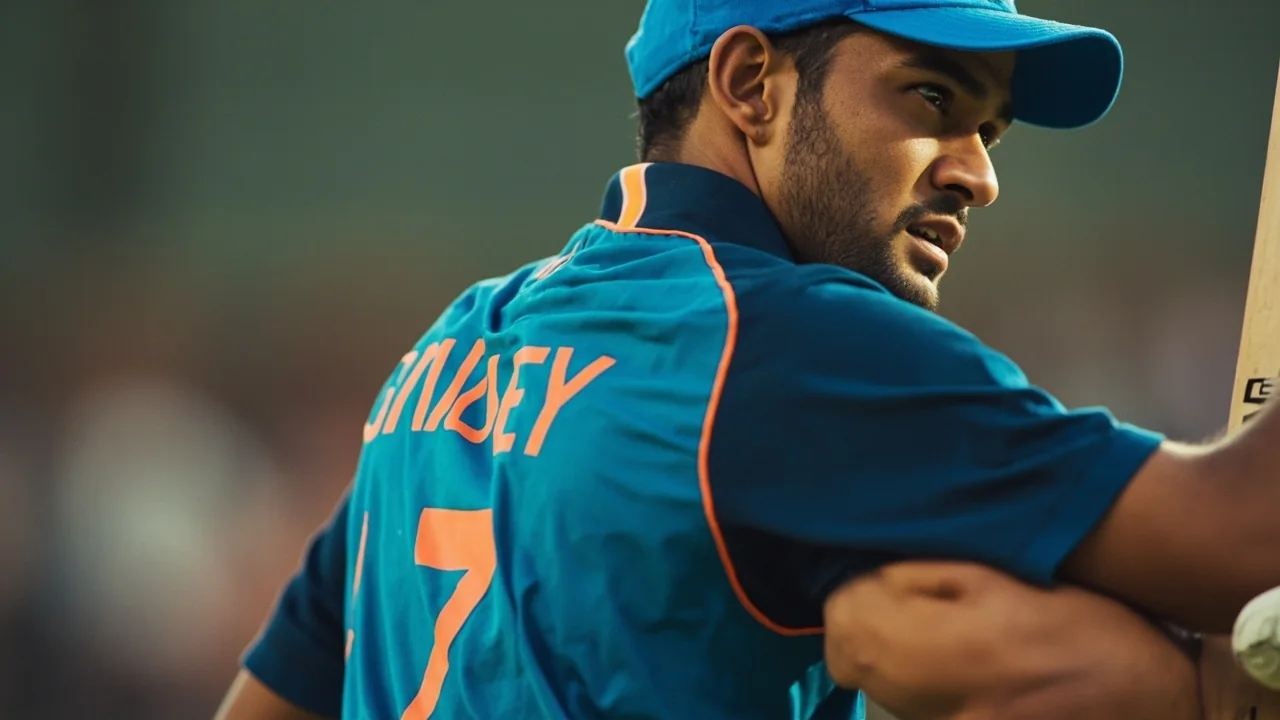
The decision carried two layers. The headline move was a change of captain: Shreyas Iyer, the Punjab Kings captain and India’s ODI vice-captain, replaced the 35-year-old Suryakumar Yadav. The harder move was the refusal to pretend the new captaincy superseded the old problem. Suryakumar’s batting form had been falling since the T20 World Cup 2026, and the wrist he had been taping since the previous IPL had not healed. The committee named both issues in its reasoning.
What follows is a record of that decision as it was framed on 8 May 2026: the form numbers that triggered the change, the wrist that compounded them, the captaincy credentials Iyer brought to the job, the upcoming series against Ireland and England, and the open fantasy questions the move left on the table.
What the BCCI actually decided
The Cricket Addictor report dated 8 May 2026, 8:13 AM IST, named the BCCI selection committee headed by Ajit Agarkar as the body that made the call. The committee confirmed that when the squads for the upcoming T20I series against Ireland and England are picked, Suryakumar Yadav will not be captain and Shreyas Iyer will lead the side. The report did not name a specific date for the squad announcement, but treated the captaincy change itself as confirmed.
The committee did not change the ODI vice-captain. Iyer was already serving in that role under the existing arrangement, and the T20I captaincy was added on top of it. The cricket that the decision concerned was the immediate T20I workload: the home series against Ireland, followed by the five-match series against England, both of which fell inside the same selection window.
The lean patch that triggered the move
The committee’s reasoning was shared by way of a Times of India report cited by Cricket Addictor. The headline reason was Suryakumar’s extended lean patch with the bat. The 35-year-old had been out of form since taking the India T20I captaincy, and the form had not recovered across the months that followed the T20 World Cup 2026 triumph in his last assignment as captain.
The numbers behind that lean patch were published with the report. In 52 matches as T20I captain, Suryakumar had scored 1,232 runs at an average of 28.65 and a strike rate of 154.96. Read on its own, the strike rate is the figure that holds the line. Read against the average, it tells a different story: a batter scoring at more than a run a ball who was also getting out often enough to drag the average below 30. The combination is the kind of profile that reads as explosive on highlight reels and as patchy on fantasy scorecards.
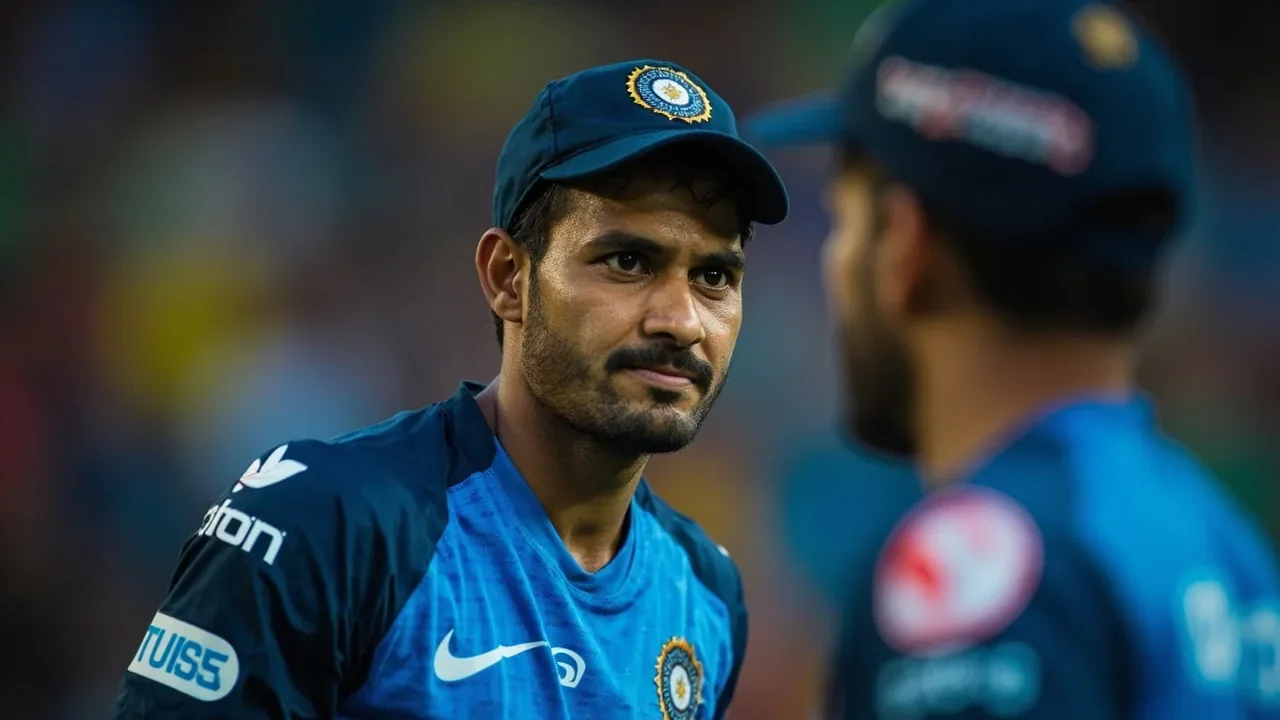
The committee did not single out any single match as the trigger. It cited the trend line. The lean patch had stretched long enough to read as a state rather than a dip, and the timing of the Ireland and England series put the committee in a position where it had to pick a captain now rather than wait for the batting to turn.
The wrist problem the news did not bury
Running in parallel with the form slump was a physical issue the report named without softening. Suryakumar had been playing through a persistent wrist injury, with heavy taping visible on his right wrist since the previous IPL and through the T20 World Cup 2026. The report described pre-batting work with Dr Rizwan Khan, the medical support staff member who had been managing the wrist through the previous tournament cycle.
A wrist problem on a top-order T20 batter is not a neutral detail. It affects grip, bat speed, and the wristwork that underpins most of the 360-degree batting Suryakumar is associated with. The report did not claim the wrist was the primary cause of the lean patch, but it placed the wrist in the same paragraph as the form, and the placement was the news. The committee had a captain whose bat was slowing and whose wrist was being taped, and the T20I calendar was not pausing for either.
The T20 World Cup 2026 remained the last assignment
One detail that bounded the decision was the World Cup result. The report framed the captaincy change against the fact that Suryakumar had guided India to the ICC Men’s T20 World Cup 2026 triumph in his last assignment. The batting slump had followed that win, not preceded it. The result meant the committee was not removing a captain who had never delivered; it was removing a captain who had delivered one of the biggest prizes in the format and then lost his form in the months that followed.
That framing matters for fantasy reading. A captain who has just won a World Cup is not the same profile as a captain whose appointment is a cold bet. The committee’s move read as a response to a specific stretch of cricket, not as a wholesale rewrite of the leadership story. The Iyer succession was a correction of direction, not a public break.
Why Shreyas Iyer was the chosen successor
The committee did not reach outside the existing setup. The choice was Shreyas Iyer, who was already serving as India’s ODI vice-captain and was leading Punjab Kings in the IPL. The Cricket Addictor report named three specific reasons Iyer was the natural successor, and the three reasons together amount to a clean case file.
The first was the IPL record. Iyer had led Punjab Kings to the IPL final the previous year. The second was the older IPL record: Iyer had led Kolkata Knight Riders to the IPL 2024 title and Delhi Capitals to an IPL final before that. The report called him the only captain to take three different franchises to an IPL final. The third was the format gap: Iyer had not played T20I cricket for India since 2023, which meant the committee was picking a captain with strong white-ball captaincy credentials and a high-match-practice IPL track record, but without a current T20I rhythm of his own.
Read together, the three points bracket the calculus. The committee was not gambling on a newcomer. It was promoting a vice-captain whose captaincy sample was built in IPL finals rather than in T20 internationals, and trusting that the IPL captaincy muscle would translate into the T20I chair.
The Olympics ambition that ran into the decision
Alongside the form and the wrist, the report recorded Suryakumar’s stated ambition to represent India at the Olympics. The committee’s decision did not retire him from the format entirely. It removed him from the captaincy. The report flagged the Olympic ambition as a separate goal that the timing of the decision now put at risk.
The framing matters because it sets the boundary of the move. The BCCI did not end Suryakumar’s T20I career; it ended his run as captain. Whether the Olympic ambition stays live depends on the India squads that follow the Ireland and England series, and on whether Suryakumar’s form recovers in the months the wrist is being treated. The report did not predict the outcome. It recorded the Olympic ambition as a stated aim, and the captaincy change as the event that complicates the road to it.
What the upcoming series set up
The immediate consequence is the T20I series against Ireland, followed by the England series. With the captaincy change confirmed, the squad announcement carries a different shape. Iyer will lead the side in both series. The vice-captaincy choice, the wicketkeeper slot, the death-over bowling plan, and the Suryakumar selection question all move into the same selection meeting.
The committee did not name the vice-captain in the report. It did not announce the squad. It did not pre-empt the question of whether Suryakumar would be selected as a non-captain batter, or whether the wrist would force him out of the squad entirely. The captaincy change was the single decision; the squad-level consequences were left for the next announcement.
What this means for fantasy selection
For fantasy selection, the 8 May 2026 decision changes three things at once. First, the captaincy vote in any multi-league fantasy contest now runs through Iyer rather than Suryakumar. The 2x multiplier and the field-setting leadership credit both attach to a different player. Second, the form-based expectation on Suryakumar resets. The lean patch had already pulled his selection share down, but the captaincy removal is a sharper signal that the committee has stopped absorbing the form slump on the promise of a recovery. Third, the wrist becomes a tracked variable. A T20 batter playing through taped wristwork is a captaincy risk and a batting risk at the same time, and the IPL fantasy contests that follow the squad announcement will price both.
The Iyer succession, by contrast, raises a captain pick question he has not had to answer in T20 internationals. He has not played a T20I since 2023. The IPL record is the input; the T20I captaincy is the new role. Fantasy players who trust the IPL captaincy record will back him in; fantasy players who want warm T20I form will wait for the Ireland series to test the case.
Together, the three shifts leave the typical fantasy brief unchanged in its shape but changed in its conclusions. The captaincy multiplier moves from one player to another. The senior batter’s form is now openly in question rather than quietly absorbed. The bowler rotation and the team balance will be set by a captain whose T20I sample is short but whose IPL captaincy sample is unusually long.
What the 8 May 2026 decision still teaches
Retrospectives on a captaincy change are most useful when they preserve the uncertainty of the original moment. On 8 May 2026, nobody knew whether the wrist would heal in time for the IPL. Nobody knew whether Iyer would be confirmed as the T20I captain for the full home summer, or whether the change was a single-series swap. Nobody knew whether Suryakumar would be in the squad at all, or whether the form slump had run long enough to keep him out of the team.
What the 8 May 2026 report did establish, on the record, is the shape of the change. The BCCI selection committee led by Ajit Agarkar removed Suryakumar Yadav as India’s T20I captain. The lean patch with the bat was the headline reason. The wrist was the parallel problem. The T20 World Cup 2026 was the last assignment. The new captain was Shreyas Iyer, who was already the ODI vice-captain and the Punjab Kings captain, and whose IPL record spans three different franchises and three finals. The upcoming series against Ireland and England were the immediate workload. The Olympic ambition was the open question the new captaincy left on the table.
For readers tracking the player side of Indian cricket, the 8 May 2026 announcement is therefore a clean case file. It captured the highest-profile T20I captaincy change of the year at the moment it was confirmed, recorded the form and the wrist that drove it, named the credentials of the player who inherited the role, and flagged the next events to watch: the squad announcement, the Ireland series, and the England series that follows.
The lasting value of the original Cricket Addictor report and the Times of India briefing it cited is structural. Both recorded what the India T20I captaincy looked like before the Ireland squad was picked, what the form and the wrist said about the outgoing captain, and what the IPL captaincy record said about the incoming one. Everything that followed the announcement belongs to a different record.
Frequently asked questions
When did the BCCI replace Suryakumar Yadav as India T20I captain?
Who replaced Suryakumar Yadav as India T20I captain?
What was the reason for the captaincy change?
What were Suryakumar Yadav’s numbers as T20I captain?
What captaincy record does Shreyas Iyer bring to the T20I role?
What happened to the T20 World Cup 2026 achievement?
What does the change mean for the upcoming T20I series?
Source note: the factual record above is drawn from the Cricket Addictor report dated 8 May 2026, 8:13 AM IST, and the Times of India report it cited on the BCCI selection committee’s decision. The captaincy change is presented in past tense as a historical record kept on the Come Sports cricket news desk, and follows the original reports’ attribution of the form slump, the wrist injury, and the Iyer succession.
For related player profiles, fantasy selection reads and career context around the India T20I setup, explore the Cricket Players archive on Come Sports.
Build smarter short-format teams
Use code BETS100 for Rs 100 welcome bonus on the official app. Live contests, captain tools and match-by-match coverage.