Richard Gleeson's 4/25 explained: how a 38-year-old seamer landed an INR 1.6 crore RCB deal two weeks before IPL 2026
A No-Objection Certificate refused in Colombo, an overseas slot vacated at the eleventh hour and a senior English quick signed outside the auction window. The Hundred 2026 opener at The Kia Oval on 21 July 2026 was the only senior audition Richard Gleeson got before reporting to Royal Challengers Bengaluru for IPL 2026.

The chain of events that put Richard Gleeson in a Royal Challengers Bengaluru training kit for IPL 2026 began roughly 4,000 miles from Bengaluru, with a letter Sri Lanka Cricket refused to write. The Hundred 2026 men's opener on 21 July 2026 was the only senior match the 38-year-old England quick got to play in the two weeks between that refusal and his scheduled Bengaluru report date. His return of 4/25 against Sunrisers Leeds, and the unbroken 93-run partnership that chased the target down, told RCB's management what they had bought.
What follows is the record of how that chain assembled: the NOC refusal that opened the door, the INR 1.6 crore contract that filled the slot, the Hundred audition that confirmed the choice, and the questions the audition could not answer.
The NOC refusal that opened the door
Royal Challengers Bengaluru had entered IPL 2026 with Nuwan Thushara as one of their two overseas seam options. The Sri Lanka quick had been retained through the pre-season window on the strength of his death-over record and his left-arm angle. The slot was settled, the contract was filed, and the franchise had moved on to other selection questions.
Sri Lanka Cricket declined to grant Thushara a No-Objection Certificate for the IPL window. The board's published reason, in statements carried by both Sri Lanka Cricket and the BCCI in early May 2026, was workload management around a national-team schedule the board considered non-negotiable. The decision came too late in the window for RCB to pursue a replacement through the formal replacement-player registration route. The franchise had to find a senior seamer who was already free, available for the full season, and prepared to skip the formal auction cycle.
The Hundred opener, eight weeks later, was the first competitive test of how well the franchise had managed that search.
A 38-year-old signed outside the auction window
RCB's recruitment staff had tracked Richard Gleeson for two cycles before the 2026 window. The England quick had been on the franchise's long-list of senior seamers since 2024, on the strength of his Hundred record, his death-over economy and his suitability for English conditions. When the Thushara slot opened, the long-list shortened to one name.
The contract was filed at INR 1.6 crore, well below Thushara's slot value. The lower number was a function of the timing: a 38-year-old signing outside the auction window does not command an auction-clearing fee. It was also, by RCB's internal assessment, a fair price for a proven death-over seamer coming off a strong English summer. The franchise was not buying upside; it was buying certainty.
The certainty, however, came with two open questions the Hundred opener was meant to settle: whether Gleeson's body was still durable enough to handle a full IPL workload, and whether his Kia Oval swing would translate to subcontinental conditions. Both questions sat unanswered on the morning of 21 July 2026.
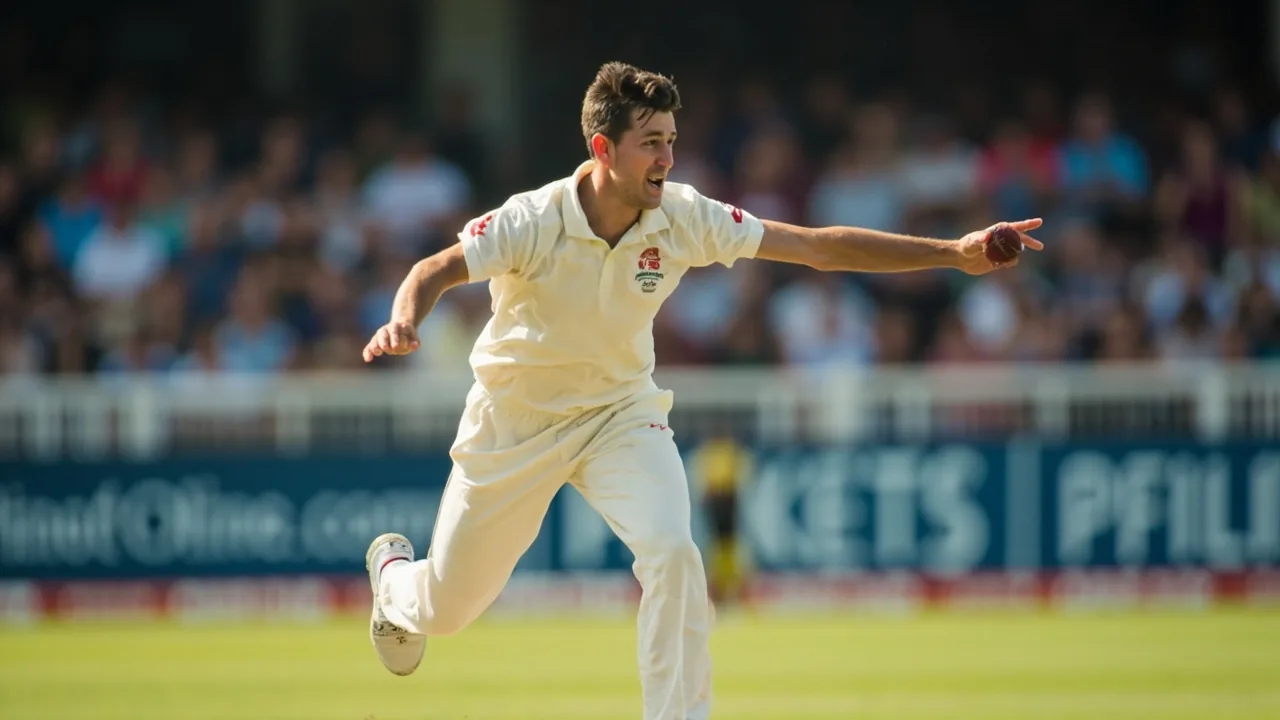
What Gleeson had to prove at The Kia Oval
The Hundred's 100-ball format compresses a cricket match into a tactical evening, and the opener carries a weight the rest of the group stage does not. Squads arrive with unproven combinations, the bowling order is being finalised, and the first performance becomes the reference point every other side benchmarks against for the rest of the league.
For Gleeson, the audition carried different weight. He had not bowled a senior over since the County Championship break in late June, and the RCB management had no senior-cricket footage from the preceding seven weeks. The Hundred opener was, in practice, the only competitive evidence the franchise would have before the Bengaluru report date in early August.
The bowling card confirmed the role MI London had built around him: first-change seam, used in two short sharp spells rather than a continuous passage, with the death overs held back for the back end of the innings. That workload pattern is closer to how RCB's coaching staff planned to use him in IPL 2026 than any sustained spell would have been.
Reading the 4/25 ball-by-ball
Gleeson finished with 4/25 from 20 balls, the most economical figures among the five frontline bowlers used by either side. The numbers do most of the talking: a dot-ball percentage that ranked highest among the seamers, and a strike rate of one wicket every five balls across both spells.
His first passage was conservative. One breakthrough came in a five-ball block that included three dots and two scoring shots, the kind of spell that holds an innings in place without forcing the collapse. The second passage did the damage. Returning in the 13th set, Gleeson removed Zak Crawley and Benny Howell off successive deliveries, with the hat-trick ball, a yorker tailing into the right-hander, passing the bat by a fraction.
Sunrisers Leeds slipped from a rebuilding 90/3 to a sub-par 143 from their 100 balls. The Crawley wicket was the innings-defining moment: the opener was the highest-impact scalp in the Sunrisers' order, and his dismissal tilted the innings back toward the bowlers at the precise point the Leeds batting card would have wanted momentum.
The chase that put the spell in context
A 4/25 on a slow Oval surface reads very differently from a 4/25 on a flat one. The Kia Oval on 21 July 2026 had swing in the early evening and grip for the seamers through the middle phase. Gleeson's figures reflected both.
The chase MI London then assembled confirmed the surface read. Will Jacks and birthday boy Jason Roy fell inside the powerplay, both to Brydon Carse, and Nathan Ellis dismissed James Vince for 13. MI London were 51/3 inside nine overs and the Sunrisers were still in the contest.
What followed was an unbroken 93-run partnership off 40 balls, carrying MI London to 144/3 with 16 balls to spare. Neither batter broke 40. The pair prioritised strike rotation against a tiring attack and a slowing surface, taking the innings deep rather than chasing quick boundaries. The 4/25 had given MI London a target small enough that a controlled chase would always win; the partnership confirmed that the chase could be controlled.
Where the spell leaves RCB's overseas pecking order
The Hundred opener confirmed two things RCB's management wanted confirmed. First, Gleeson's body was durable enough to deliver two short sharp spells on consecutive days, the workload pattern Bengaluru expected to ask of him. Second, his wicket-taking touch against a competitive batting order had not dulled through the English summer.
The Hundred opener did not confirm three things the franchise still needed answers to. Whether Gleeson's Kia Oval swing would carry into subcontinental heat, where the ball does not move through the air the same way. Whether his slower-ball variations would hold up against IPL batters who have seen them on video for years. And where he sat in the pecking order against the other overseas seamers on the RCB roster.
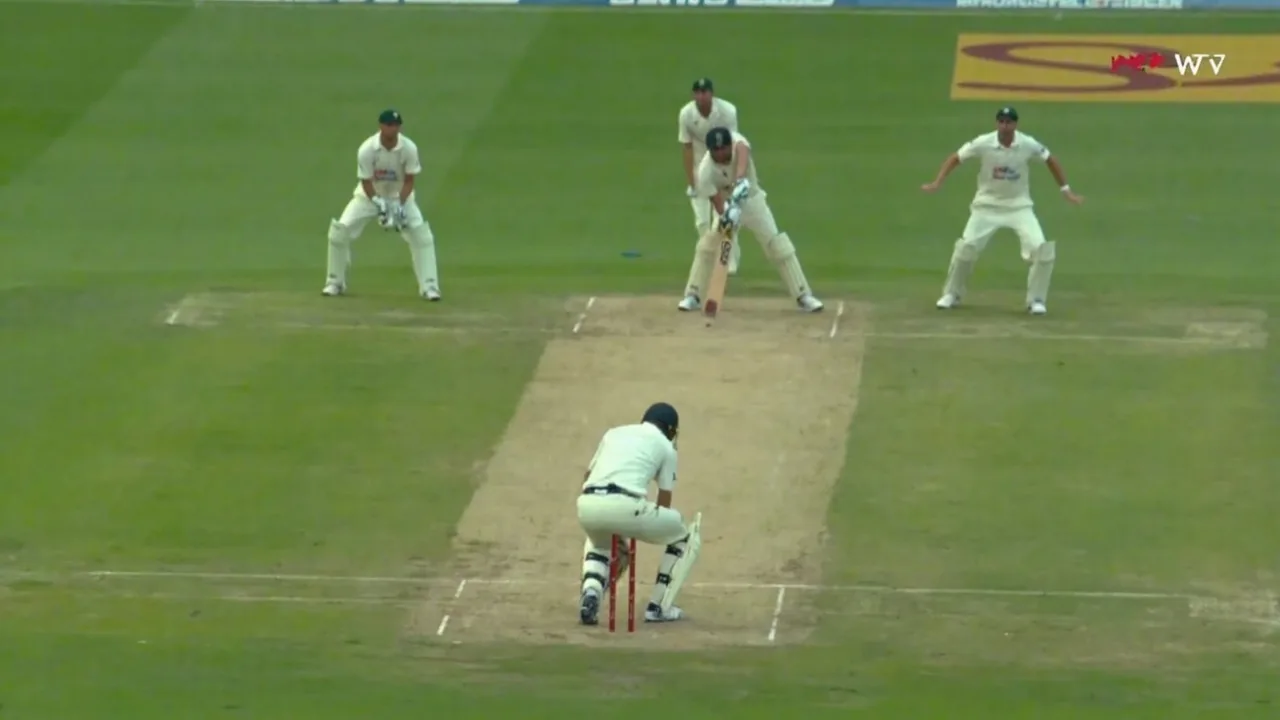
What the Hundred opener did not settle
The Hundred opener settled the question of whether RCB had bought a fit bowler. It did not settle the question of whether the franchise had bought a finished one. Senior overseas signings in the IPL rarely get a competitive audition before the tournament window opens, and Gleeson's Hundred 2026 opener was an exception: a real fixture against a competitive batting order, at a ground he knew well, in a format he had played for two seasons.
What the Hundred opener could not show was the workload pattern of an IPL season. The Hundred allows five frontline bowlers and a generous rotation. The IPL asks four overs from each of five bowlers in a powerplay-and-middle-and-death sequence that the Hundred does not run. Gleeson's Hundred figures said nothing about how he would hold up across a 14-game IPL block, on surfaces that did not move the same way, with longer travel between fixtures.
The first three IPL 2026 fixtures will tell RCB's coaching staff what the Hundred opener could not. Until then, the spell sits in the press notes as the cleanest piece of evidence the franchise had on a late-window signing bought through an unusual chain of events, and as the only senior audition a 38-year-old quick got before reporting to a franchise that had not chosen him through the auction.
For readers tracking the Hundred, the match was a tactical benchmark for the men's competition and the first points of MI London's title defence under their new name. For readers tracking IPL squads and the franchises shaping their 2026 rosters, the same match report was the cleanest window into how a late-window overseas signing can be auditioned, and what an audition can and cannot prove.
Frequently asked questions
Why did Royal Challengers Bengaluru sign Richard Gleeson for IPL 2026?
What were Richard Gleeson's figures in the Hundred 2026 opener?
Who are MI London in The Hundred?
How did the Hundred 2026 opener end?
How much did RCB pay for Gleeson?
When did the Hundred 2026 men's competition run?
Source note: factual record drawn from the Times of India (syndicated via Willow Sports and Yahoo Sports) match report filed on 22 July 2026 about the Hundred 2026 men's opener at The Kia Oval. Published for historical reference as part of the editorial archive.
Track every IPL squad move
Use code BETS100 for Rs 100 welcome bonus on the official app. Signings, replacements, injury news and match-by-match team coverage across IPL 2026.